
EHD vs CWD… pull up your chair and let’s chat. There’s been a lot of talk lately about deer diseases—especially with CWD being confirmed in Delaware. But I’m going to be honest with you… most hunters I talk to aren’t seeing CWD firsthand.
What they are seeing is EHD.
If you’ve been hunting the Eastern Shore for any amount of time, you’ve probably come across a dead deer near water in late summer or early fall. That’s not new. That’s Epizootic Hemorrhagic Disease—EHD—and it’s something we deal with here in Maryland almost every single year.
So let’s break this down the right way—no hype, no opinions—just what matters to you as a hunter and land manager.
What is EHD (Epizootic Hemorrhagic Disease)?
EHD is a viral disease that affects whitetail deer and is transmitted by biting midges—commonly known as “no-see-ums.”
It shows up almost every year in Maryland, especially during hot, dry late summer conditions.
In fact, as of September 2025, the Maryland Department of Natural Resources confirmed EHD outbreaks in multiple counties, including Anne Arundel, Baltimore, Howard, Montgomery, and Prince George’s.
This is not a rare event. This is part of deer hunting. This is why EHD vs CWD matters because they are very different.
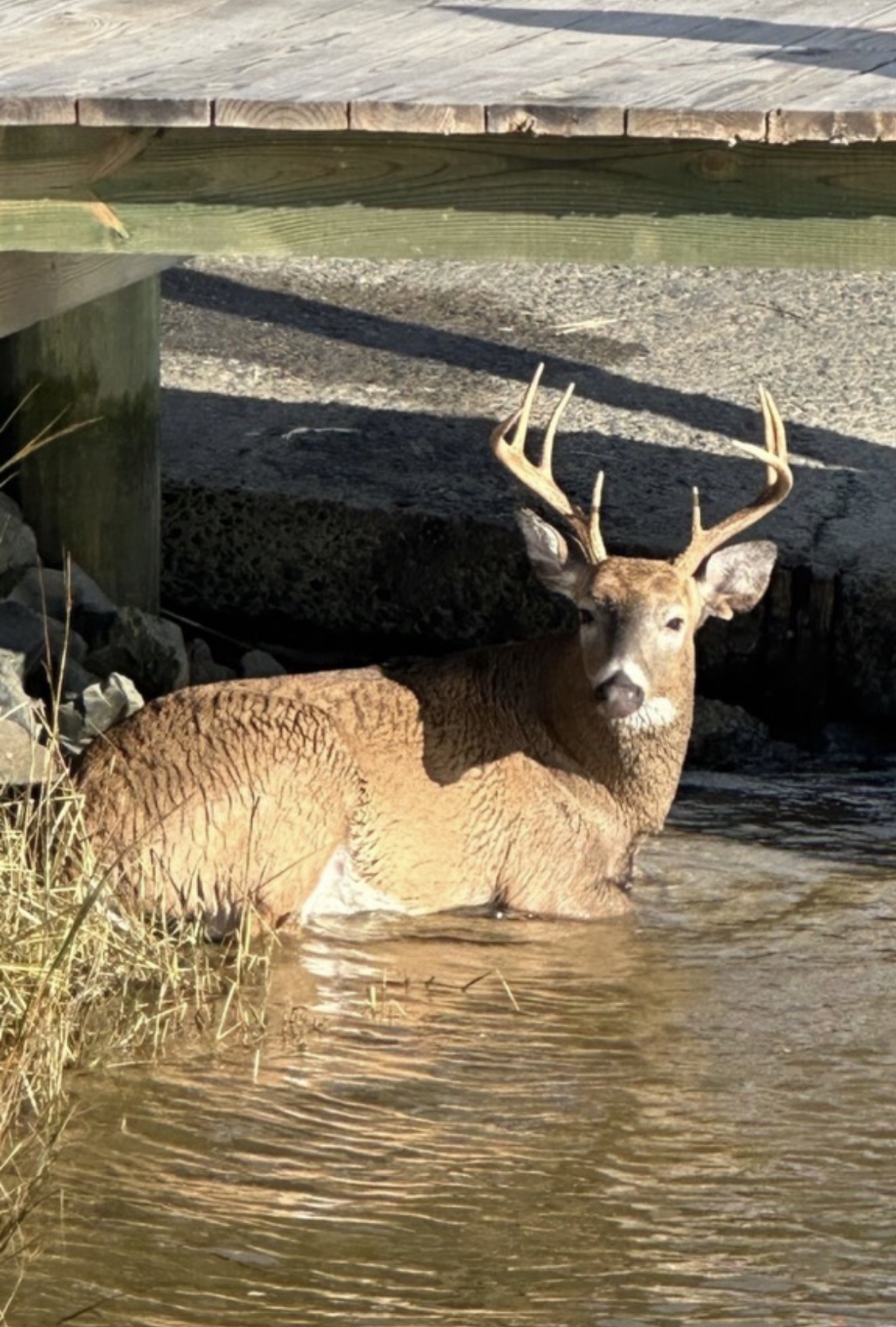
Infected deer often develop a high fever and are drawn to water, which is why they’re commonly found near ponds, creeks, and marsh edges like the deer in this picture below. This deer did end up expiring later that evening.

What is CWD (Chronic Wasting Disease)?
CWD is a completely different type of disease.
It’s caused by prions—misfolded proteins that affect the brain and nervous system. Unlike EHD, it’s not spread by insects. It spreads through direct contact between deer and contaminated environments.
CWD progresses slowly. A deer can carry it for months—or even years—before showing visible signs.
Recently, Delaware confirmed its first case in a whitetail deer in Sussex County, which puts it on the radar for anyone hunting the Eastern Shore.
EHD vs CWD- Key Differences Between EHD and CWD
The biggest difference comes down to speed and impact.
EHD is fast. When a deer gets it, it usually dies within a short period of time. Outbreaks can cause noticeable losses in a single season, but the herd typically rebounds.
CWD is slow. It spreads over time and doesn’t cause sudden die-offs. Instead, it gradually impacts herd health and age structure over the long term.
Another major difference is transmission.
EHD comes from insect bites. If conditions change—like the first frost killing off midges—the outbreak stops.
CWD doesn’t work that way. It can persist in the environment and spread through deer-to-deer contact.
And then there’s what you actually see as a hunter.
With EHD, you’ll find dead deer—often near water—in a short window of time.
With CWD, it’s much harder to detect without testing, especially early on.

EHD vs CWD-What Hunters Are Actually Dealing With Right Now
Let’s keep this grounded in reality.
On the Eastern Shore and across Maryland, EHD is the disease hunters are most likely to encounter firsthand.
It happens almost every year to some degree, and some years are worse than others depending on weather conditions.
CWD, on the other hand, is something to be aware of—but not something most hunters here have personally seen on their properties.
That distinction matters.
What This Means for Your Property
From a land management standpoint, these diseases require two completely different mindsets.
With EHD, there’s not much you can do to stop it. You’re dealing with an insect-borne virus tied to weather conditions. The best approach is to understand that some loss may occur and focus on long-term herd health.
But again—what impacts your property this season is far more likely to be EHD.

What to Watch For
During late summer and early fall, keep an eye out for:
- Dead deer near water sources
- Deer that appear weak, disoriented, or uncoordinated
- Sudden drops in trail camera activity
These are common indicators of EHD activity in your area. Be sure to educate yourself so you understand EHD vs CWD and what each means to your herd.
Final Thoughts on EHD vs CWD
EHD vs CWD. Not all deer diseases are the same—and treating them like they are leads to bad decisions.
EHD is something we’ve dealt with for years here in Maryland. It’s real, it’s seasonal, and while it can hit hard in the short term, deer populations usually recover.
CWD is something to stay informed about, especially with it now confirmed nearby—but it’s a different type of issue entirely.
As hunters and land managers, our job is to stay informed, stay observant, and make smart decisions based on what’s actually happening on the ground.
About the Author
Captain David Fletcher is the owner of Nanticoke Outfitters, offering guided Sika deer, whitetail deer, and waterfowl hunts on Maryland’s Eastern Shore. With decades of experience managing private land and hunting mature deer, he focuses on low-pressure strategies and long-term herd health.
