
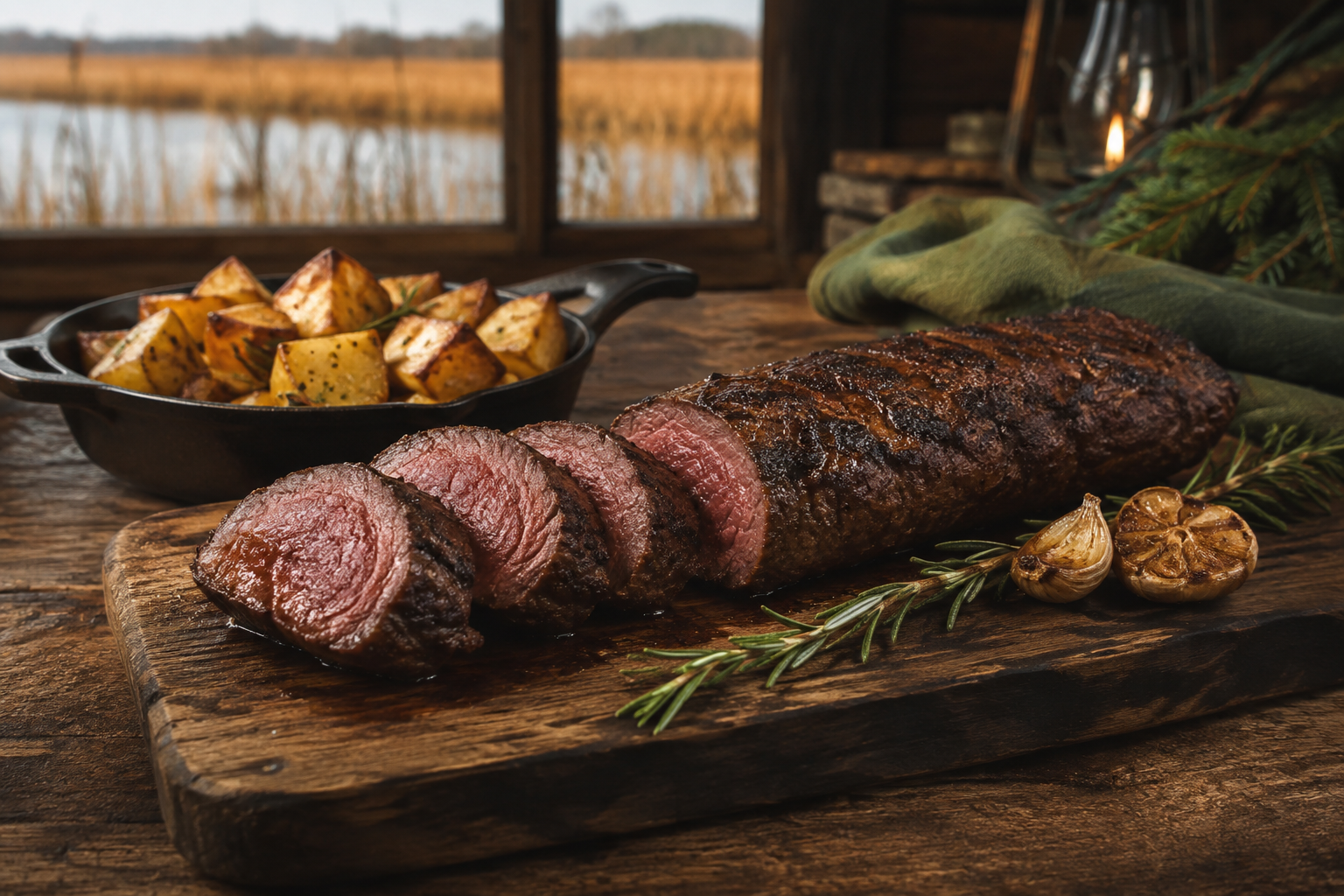
There are plenty of complicated wild-game recipes available, but when I have a good piece of sika deer backstrap, I prefer to keep things relatively simple.
Sika venison has a rich but mild flavor, and a properly handled backstrap does not need to be soaked overnight or covered with enough seasoning to hide the taste. It needs to be trimmed carefully, seasoned well and cooked without drying it out.
That last part is where many people run into trouble.
Sika venison is extremely lean. It does not have the internal fat that helps protect a beef steak when it remains on the grill a little too long. That makes sika deer backstrap tender and healthy, but it also means you need to pay attention to the heat, cooking time and internal temperature.
This grilled sika deer backstrap recipe uses a simple Eastern Shore-inspired marinade with garlic, rosemary, Worcestershire sauce and a little brown sugar. The marinade adds flavor and helps produce a beautiful crust without overpowering the meat.
If this is your first time preparing sika venison, start with our complete guide on how to cook sika deer. That guide explains how to select the right cooking method for every major cut.
What Is a Sika Deer Backstrap?
The backstraps are the long muscles that run along the outside of the spine. They are among the most tender and highly prized cuts on a sika deer.
Backstrap is sometimes confused with tenderloin, but the two are not the same. The tenderloins are smaller muscles located inside the body cavity. The backstraps are much larger and are removed from the outside of the spine.
Both are excellent, but their difference in size affects how they should be cooked. A small tenderloin cooks very quickly, while a section of backstrap is usually large enough to grill whole.
For this recipe, I prefer using a whole section of backstrap rather than cutting it into individual steaks before cooking. The larger piece is easier to manage on the grill, retains moisture better and gives you more control over the finished temperature.
Once it has rested, you can slice the backstrap into thick medallions for serving.
The Most Important Step: Trim the Backstrap Properly
Before thinking about marinades or grill temperatures, inspect the backstrap and remove any remaining silver skin, fat and connective tissue.
Silver skin is the thin, shiny membrane you will sometimes see on the outside of a backstrap. It does not become tender during quick cooking. If it is left attached, it can tighten on the grill and make a tender piece of venison seem tough.
Use a sharp fillet or boning knife and slide the blade immediately underneath the silver skin. Angle the cutting edge slightly upward and work slowly so you remove the membrane without wasting good meat.
You should also remove any deer fat remaining on the backstrap. Unlike beef fat, venison fat can have a waxy texture and sometimes carries a stronger flavor. Starting with clean, properly trimmed meat makes a noticeable difference in the final meal.

Should You Soak Sika Deer Backstrap?
A properly handled sika backstrap does not normally need to be soaked in milk, buttermilk or salt water.
Some families have soaked venison for generations, and there is nothing wrong with continuing a tradition you enjoy. However, soaking is often used to cover strong flavors caused by poor field care, freezer burn, excess deer fat or overcooking.
Fresh, properly handled sika venison should have a clean and pleasant flavor. I would rather complement that flavor than try to remove it.
For this recipe, a short marinade is all that is needed.
Eastern Shore Grilled Sika Deer Backstrap Recipe
Ingredients
- 1½ to 2 pounds of sika deer backstrap
- 2 tablespoons olive oil
- 1 tablespoon Worcestershire sauce
- 3 cloves garlic, finely minced
- 1 teaspoon fresh rosemary, finely chopped
- 1 teaspoon fresh thyme leaves
- 1 teaspoon brown sugar
- 1 teaspoon kosher salt
- 1 teaspoon coarse black pepper
- ½ teaspoon onion powder
- 1 tablespoon butter for finishing
- Additional rosemary or thyme for garnish, if desired
Equipment
- Outdoor grill
- Instant-read meat thermometer
- Mixing bowl or resealable bag
- Tongs
- Clean cutting board
- Sharp slicing knife
- Aluminum foil
Preparation Time
- Trimming and preparation: 15 minutes
- Marinating time: 2 to 4 hours
- Cooking time: approximately 10 to 18 minutes
- Resting time: 10 minutes
- Servings: approximately 4
Step 1: Trim the Sika Deer Backstrap
Remove all visible silver skin, connective tissue and exterior fat from the backstrap. Pat the meat dry with paper towels.
If the backstrap is extremely long, divide it into two evenly sized sections. Try to keep each section relatively uniform in thickness so it cooks evenly.
Do not slice it into medallions yet.
Step 2: Prepare the Marinade
In a small bowl, combine the olive oil, Worcestershire sauce, garlic, rosemary, thyme, brown sugar, kosher salt, black pepper and onion powder.
Stir until the brown sugar and seasonings are evenly incorporated.
Place the backstrap in a resealable bag or shallow nonreactive dish. Pour the marinade over the meat and turn it several times to coat every side.
Refrigerate it for two to four hours.
I do not recommend leaving this particular marinade on the backstrap for more than eight hours. Sika venison has a fine texture, and an excessively long marinade is unnecessary.
Step 3: Bring the Meat Out Before Grilling
Remove the backstrap from the refrigerator approximately 20 to 30 minutes before cooking. This takes some of the chill off the exterior and promotes more even cooking.
Do not leave raw meat sitting at room temperature for an extended period.
Take the backstrap out of the marinade and allow the excess liquid to drip away. Lightly pat the surface with a paper towel, but do not wipe away all the seasoning.
Discard the used marinade.
Step 4: Prepare the Grill
Preheat the grill for two-zone cooking.
One side should be hot enough to sear the meat, ideally around 450°F to 500°F. The other side should provide lower, indirect heat that allows you to finish the center without burning the exterior.
Clean the grill grates and apply a light coating of high-temperature cooking oil if necessary.
The brown sugar in the marinade helps create a flavorful crust, but it can burn if the grill produces constant flames. Keep an eye on flare-ups.

Step 5: Sear the Backstrap
Place the backstrap directly over the hottest part of the grill.
Sear the first side for approximately two to three minutes. Turn it with tongs and continue searing the remaining sides until the exterior develops a deep brown crust.
Avoid repeatedly moving or piercing the meat. Give each side enough time to make good contact with the grill.
Once the exterior is browned, move the backstrap to the cooler side.
Step 6: Finish Over Indirect Heat
Close the grill lid and continue cooking the backstrap over indirect heat.
Begin checking the center with an instant-read thermometer after several minutes. Insert the thermometer into the thickest portion without pushing the probe completely through the meat.
Cooking time will vary depending on the thickness of the backstrap, the grill temperature and how cold the meat was when it went onto the grill. Trust the thermometer rather than the clock.
For conservative food-safety guidance, cook a whole cut to an internal temperature of at least 145°F and allow it to rest for a minimum of three minutes. At Nanticoke Outfitters, we would rather give readers conservative guidance than encourage someone to judge safety based only on the meat’s color.
Do not cook it beyond the desired temperature simply because you are worried about seeing some pink. Color alone is not an accurate indication of whether meat is properly cooked. Use a reliable thermometer.
Step 7: Add Butter and Rest
Transfer the backstrap to a clean cutting board and place the tablespoon of butter on top while the meat is still hot.
Tent it loosely with aluminum foil and allow it to rest for approximately 10 minutes.
Do not wrap it tightly. A tight foil package traps steam and can soften the crust you worked to create.
Resting gives the temperature time to equalize throughout the meat and helps retain more of its natural juices when sliced.
Step 8: Slice Across the Grain
After resting, identify the direction of the muscle fibers and slice across them.
Cut the backstrap into medallions approximately ½ to ¾ inch thick. Slicing across the grain shortens the muscle fibers and makes every piece easier to chew.
Arrange the medallions on a serving platter and spoon any juices from the cutting board over the top.
What to Serve With Grilled Sika Deer Backstrap
Sika backstrap works well with simple sides that complement the meat rather than compete with it.
Some of my favorites include:
- Cast-iron roasted potatoes
- Grilled asparagus
- Sautéed mushrooms and onions
- Roasted Brussels sprouts
- Sweet potatoes
- Fresh Eastern Shore sweet corn
- Garlic mashed potatoes
- A simple garden salad
- Crusty bread for soaking up the juices
A mushroom pan sauce or light red-wine reduction is also excellent, but I recommend serving it on the side. Let everyone taste the sika before covering it with sauce.
Can This Recipe Be Cooked in a Cast-Iron Skillet?
Yes. If the weather is bad or you do not have access to a grill, this recipe works very well in cast iron.
Preheat a heavy skillet over medium-high heat and add a small amount of high-temperature cooking oil. Sear the backstrap on every side, then reduce the heat and add butter, garlic, rosemary and thyme.
Baste the meat continuously with the melted herb butter until it reaches the desired internal temperature.
Depending on the thickness, you may need to finish the skillet in a preheated oven. Continue checking the center with a thermometer.
Maryland DNR also features a sika tenderloin preparation using a hot pan, butter, thyme and rosemary. It is another example of how simple ingredients can highlight the quality of sika venison.
Common Mistakes When Grilling Sika Backstrap
Failing to remove the silver skin
Silver skin will not become tender during the short cooking time used for backstrap. Remove it before marinating.
Cutting the backstrap into thin steaks
Thin pieces cook very quickly and leave little room for error. Grilling a larger section whole makes it easier to develop a crust without drying out the center.
Using too much acid
Strong acids can affect the surface texture of the meat when left too long. A quality sika backstrap does not need to be soaked in vinegar or citrus juice overnight.
Walking away from the grill
Sika venison cooks faster than many people expect. Stay near the grill and begin checking its temperature early.
Guessing by color
The exterior can look finished while the center remains below your intended temperature. The reverse is also possible. Use a thermometer.
Skipping the resting period
Cutting into the backstrap immediately allows more moisture to escape onto the cutting board. Give it time to rest.
Slicing with the grain
Even a properly cooked backstrap will seem tougher when cut in the wrong direction. Always slice across the muscle fibers.
Frequently Asked Questions
Is sika deer backstrap the same as tenderloin?
No. Backstraps run along the outside of the spine, while the smaller tenderloins are located inside the body cavity. Both are tender, but they differ considerably in size.
How long should I marinate sika backstrap?
Two to four hours is enough for this recipe. Avoid marinating it for longer than eight hours unless a different recipe specifically calls for it.
Can I use this recipe for whitetail or other venison?
Yes. The same marinade and grilling method can be used for whitetail deer, elk and similar lean wild-game meats. Cooking time will change depending on the size and thickness of the cut.
Why is my sika backstrap tough?
The most common causes are leaving silver skin attached, overcooking the meat, failing to let it rest or slicing it with the grain.
Can I freeze the backstrap in the marinade?
Yes, provided both the backstrap and marinade are fresh when packaged. Freeze them promptly in a properly sealed freezer bag. Allow the package to thaw safely in the refrigerator before cooking.
Can I reuse the marinade?
Do not use marinade that has been in contact with raw venison as a finishing sauce unless it is first brought to a full, safe boil. It is generally easier to reserve a clean portion before adding the raw meat.
From the Marsh to the Table
A Maryland sika hunt does not truly end when the animal is recovered. The meat you bring home is one of the greatest rewards of the entire experience.
Backstrap is often the first cut hunters want to cook, and for good reason. When it is properly trimmed, simply seasoned and carefully grilled, it provides a meal that is every bit as memorable as the hunt itself.
Do not over complicate it. Start with quality meat, use a hot grill, monitor the internal temperature and give the backstrap time to rest. Those basic steps will produce a better result than covering it with a dozen unnecessary ingredients.
If harvesting a Marsh Ghost is still on your hunting list, learn more about our guided Maryland sika deer hunts. Nanticoke Outfitters manages five sika properties in Dorchester County with approximately 50 stand locations, allowing us to rotate hunting pressure and select stands based on current conditions.
Our guides assist throughout the hunt, including getting hunters safely into their stands, helping with recovery and properly handling the animal after a successful shot.
The hunt provides the story. A meal like this allows you to share it.
About the Author

David Fletcher is the owner of Nanticoke Outfitters and has spent decades hunting, fishing and guiding on Maryland’s Eastern Shore. Nanticoke Outfitters offers guided sika deer, turkey and waterfowl hunts, emphasizing responsible property management, quality outdoor experiences and respect for the game being pursued.