
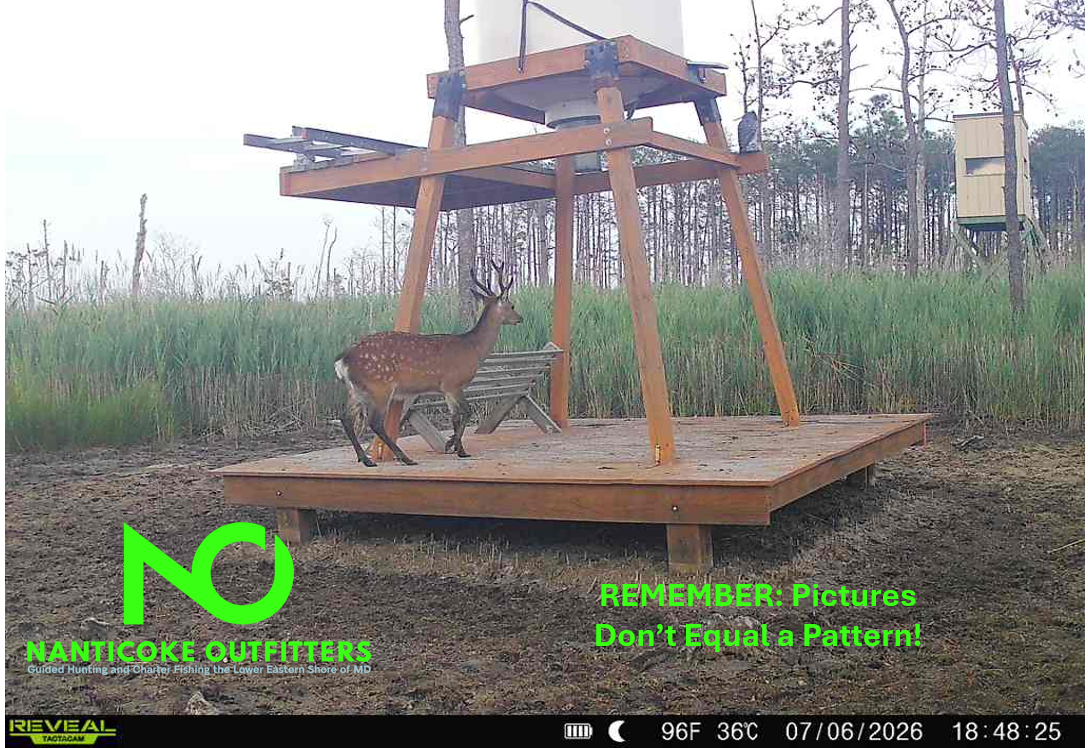
There was a time when simply getting a picture of a good buck felt like a major accomplishment. We would pull a card, scroll through the pictures and get excited because we finally knew that deer was on the property. But now we can go as far as creating a trail camera strategy for deer to get more and better quality intel.
Today, cellular trail cameras can send hundreds—or even thousands—of pictures directly to our phones. We know when deer visit a feeder, when they cross a trail and sometimes which direction they are traveling. We have more information than hunters have ever had before.
But more pictures do not automatically lead to more success.

In fact, I see hunters make the same mistake every summer: they collect a pile of pictures without developing a real plan for how that information will change the way they hunt. A trail camera should be a scouting tool, not just an outdoor photo album.
At Nanticoke Outfitters, we use cameras across the private properties we manage on Maryland’s Eastern Shore. The goal is not simply to see how many deer are present. We want every camera to answer a question.
That is the difference between running cameras and having a real trail camera strategy for deer.
Start With a Question, Not a Camera Location
One of the most common mistakes is putting a camera somewhere only because deer are easy to photograph there. A feeder, mineral site or food source may produce plenty of activity, but it does not always tell you how those deer can be hunted.
Before I place a camera, I want to know what I am trying to learn.
Is this deer entering from the north or the south? Is it coming out before dark or only after legal shooting light? Is it using the same trail on a west wind? Is this location part of its normal travel pattern, or is it only stopping there because food is available?
Those questions determine where the camera belongs.
A camera placed directly over food can help identify which deer are using an area. A camera positioned along a travel corridor may tell us where they are coming from. Another camera closer to cover can help determine when they are getting on their feet.
Each camera has a different job. When several cameras work together, the property begins to tell a story.
Trail Camera Strategy for Deer PSA: Pictures Are Not Patterns
One picture of a mature deer is exciting, but it is not a pattern.
A true pattern begins to develop when the same deer appears repeatedly under similar conditions. I look for connections involving time, wind direction, weather, temperature and the direction of travel. I also compare activity between cameras instead of studying each location by itself.
Suppose a buck appears at one camera at 7:45 p.m. and reaches a food source twenty minutes later. That tells me far more than a dozen close-up pictures at the food source. The first camera may reveal the travel corridor that offers a daylight opportunity. The second camera only confirms where the deer eventually wanted to go.
This is especially important with mature deer. They often reach the most obvious camera locations after dark. If you only watch the destination, you may conclude that the deer is entirely nocturnal. In reality, it may be moving during daylight a few hundred yards closer to its bedding cover.
The best camera is not always the one sending the most pictures. It is the one giving you the most useful information.

Stop Checking Cameras Too Often
Cellular cameras have changed the way we scout because they allow us to gather information without walking into a property every week. That is a major advantage, but only when the camera is installed correctly and allowed to do its job.
Every unnecessary trip leaves scent, makes noise and increases the chance that deer will associate a location with human activity. Hunters sometimes check a camera because they are curious, adjust it because a few pictures are imperfect and then return again to replace batteries that could have been changed during the first visit.
By the time the season arrives, the deer have already learned that people regularly visit the area.
When we install cameras, we try to handle as much as possible in one trip. We use dependable equipment, good batteries, adequate storage and solar power where it makes sense. We trim only what is necessary, test the signal and make sure the camera is positioned correctly before leaving.
Then we stay out.
That low-impact approach is one reason cellular cameras are such an important part of our management system. They allow us to keep learning while the property stays quiet.
Pay Attention to Wind and Access
Hunters often study the wind before sitting in a stand but ignore it when servicing a camera. Deer do not know the difference between a hunting trip and a camera trip. They only know that a person entered their space.
I try to approach cameras with the same discipline I would use during hunting season. I consider the wind, avoid crossing major travel routes and enter during a time when deer are least likely to be nearby. If a camera can only be reached by walking through bedding cover, it may be doing more harm than good.
This is also why camera placement and stand placement cannot be separated from property access. A location may show outstanding deer movement, but if the only way to reach it forces a hunter to cross the trail or send scent into a bedding area, it may not be a location we can hunt consistently.
Useful scouting information must lead to a huntable setup.

Do Not Chase Every New Picture
Cell cameras create another temptation: reacting too quickly.
A mature deer appears during daylight and suddenly a hunter wants to move a stand, trim a lane or walk into the property that afternoon. Sometimes a quick adjustment is justified, but constantly chasing individual pictures usually creates more pressure than opportunity.
I would rather see a repeatable pattern before making a major move. One daylight picture may have resulted from a storm, a disturbance on a neighboring property or a temporary food source. Several appearances under similar conditions carry much more weight.
Our decisions are based on the whole property, not one exciting notification. We compare the picture with other cameras, recent pressure, wind conditions and what we already know about bedding and travel. That prevents us from burning a good location because of one piece of incomplete information.
Use Cameras to Manage Pressure, Not Just Deer
Some of the most valuable pictures on a trail camera are not pictures of deer.
Cameras can show when hunters, farm workers, neighboring landowners, predators or other activity are affecting a property. They can reveal that deer disappear after repeated vehicle traffic or that movement shifts toward a quieter part of the farm once hunting begins.
That information helps us manage pressure.
At Nanticoke Outfitters, we rotate stand locations and avoid hunting the same areas repeatedly. Camera activity helps us determine which stands remain fresh and which sections of a property need a break. When movement changes, we do not automatically assume the deer left. Often, they simply adjusted to pressure.
A good camera program monitors the behavior of the deer and the impact of the people hunting them.
Turn Summer Information Into a Hunting Plan
Look at which deer are appearing consistently, but also study where they enter, which winds favor their movement and how early they arrive. Identify the camera locations that provide inventory and the locations that reveal huntable movement. Then compare that information with your stands and access routes.
Ask yourself a few honest questions:
- Can I reach the stand without crossing the deer’s travel route?
- Can I hunt it with a safe wind that also keeps my scent away from bedding cover?
- Is the movement happening during legal shooting light?
- Do I have another stand available when the wind changes?
- How many times can I hunt this location before pressure changes the pattern?
If your camera data cannot help answer those questions, it is not yet a hunting strategy.

Trail Camera Strategy for Deer Means Better Decisions Produce Better Seasons
Trail cameras are one of the best scouting tools we have, but they cannot make decisions for us. Success still comes down to reading the property, understanding deer behavior and controlling pressure.
The goal is not to collect the most pictures. The goal is to learn enough that you can be in the right stand, on the right wind, without letting the deer know you are there.
That is how we use cameras on the properties we manage, and it is the same approach we bring to our land management services. We help landowners evaluate camera data, improve stand locations and create a complete plan that turns information into more consistent hunting.
If you are getting plenty of pictures but not seeing those deer from the stand, the problem may not be your deer population. It may be the way the information is being used.
Stay focused, committed, and shoot straight.
— Capt. David Fletcher, Owner, Nanticoke Outfitters
About the Author

Capt. David Fletcher is the owner of Nanticoke Outfitters and has more than 40 years of hunting and land-management experience on Maryland’s Eastern Shore. He is an NDA Deer Steward Level 1 and manages private hunting properties using practical, science-based strategies for habitat, access, stand placement and pressure control.