
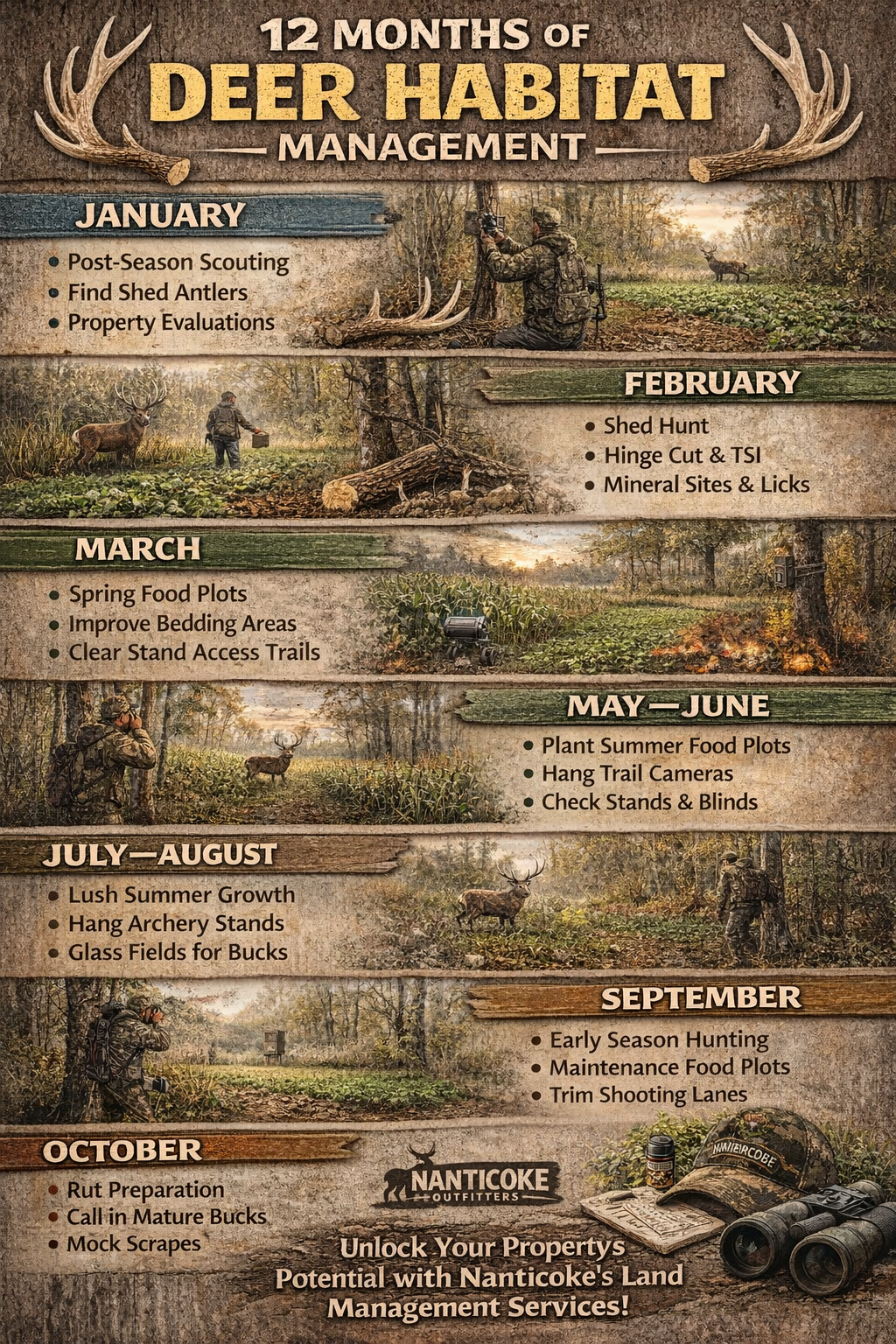
While most hunters are thinking about turkey season or fishing this time of year, serious deer managers know that spring is one of the most important times to improve a property for the upcoming fall hunting season. So let’s dive into some spring deer habitat improvement that you should consider at your hunting property.
The work done during the spring months directly impacts deer health, habitat quality, and ultimately the opportunity to harvest mature bucks.
At Nanticoke Outfitters, we spend the off-season walking properties, evaluating deer movement, and implementing strategic improvements that help produce healthier deer and better hunting opportunities. Whether you’re managing land for whitetails or Sika deer on Maryland’s Eastern Shore, the principles of good habitat management remain the same.
If you want to see bigger bucks on your property this fall, the work starts now.

Why Spring Is the Best Time for Habitat Improvements
Spring is ideal for habitat work for several reasons.
First, deer are recovering from the stress of winter and the rut, making quality nutrition especially important. Improving food sources during this time can help bucks recover body weight and begin developing healthy antlers.
Second, vegetation has not fully grown in yet, which makes it easier to see trails, bedding areas, and travel corridors that were used during the fall.
Finally, completing habitat work now allows the property to settle down well before hunting season begins.
When improvements are made early in the year, deer become comfortable using those areas long before hunters return to the woods.

Improving Food Sources
One of the most effective ways to improve deer habitat is by enhancing available food sources.
Food plots are a powerful tool for attracting and holding deer on a property. Spring is the time to prepare soil, test nutrient levels, and plant crops designed to provide nutrition throughout the summer and early fall.
Common spring food plot crops include:
• Soybeans
• Clover
• Chicory
• Alfalfa
These plants provide the protein deer need during the months when bucks are growing antlers.
On many of our managed properties, we also evaluate natural food sources, ensuring deer have access to high-quality forage throughout the year.

Creating Better Bedding Areas
Another important aspect of spring deer habitat improvement is identifying and protecting bedding areas.
Deer prefer bedding locations that provide security, good visibility, and protection from wind. In marsh environments like those found across Dorchester County, bedding areas are often located along the edges of thick phragmites or elevated marsh islands.
When evaluating bedding areas, we focus on:
• Minimizing human disturbance
• Improving cover
• Maintaining secure travel routes
The goal is to allow deer to feel safe using these areas during daylight hours.
When deer feel secure on a property, they are much more likely to remain there during hunting season.
Improving Stand Access and Travel Routes
A common mistake many hunters make is placing stands directly where deer want to travel without considering how hunters will access those locations.

Spring is a great time to improve stand access routes.
This can include:
• Clearing quiet walking paths
• Creating entry routes that avoid bedding areas
• Adjusting stand locations based on post-season scouting
At Nanticoke Outfitters, we rotate stand locations across multiple properties to minimize hunting pressure and keep stands fresh throughout the season.
Improving access routes now helps reduce disturbance later when it matters most.

Monitoring Deer with Trail Cameras
Trail cameras are another valuable tool when managing deer habitat.
After making improvements to a property, we often place cameras in strategic locations to monitor deer activity throughout the spring and summer months.
Cameras help us:
• Identify which bucks survived the season
• Monitor herd health
• Track deer movement patterns
• Evaluate how deer respond to habitat improvements
The information gathered during the off-season allows us to refine our hunting strategy well before opening day.

Long-Term Habitat Management
Producing mature bucks on a property rarely happens overnight. It requires consistent management and long-term planning.
Small improvements made each year can dramatically improve how deer use a property over time.
At Nanticoke Outfitters, we take a long-term approach to property management by focusing on:
• Sustainable deer populations
• Habitat improvements
• Strategic hunting pressure
• Ethical harvest practices
These principles allow us to maintain healthy deer populations while creating high-quality hunting experiences for our clients.
Land Management Services on Maryland’s Eastern Shore
Because so many hunters ask for help improving their properties, Nanticoke Outfitters now offers land management consulting services across the Delmarva region.
As a National Deer Association Deer Steward Level 1, we work with landowners to evaluate properties and develop customized strategies for improving deer habitat and hunting success.
Our services include:
• Property evaluations
• Food plot planning
• Deer stand placement
• Box blind installation
• Annual deer management plans
If you want to improve the hunting potential of your property, we would be happy to help.
Learn more about our land management services by CLICKING HERE
Final Thoughts
The best deer properties are not created by accident. They are the result of thoughtful planning, habitat improvements, and careful management.
Spring is the perfect time to start making those improvements.
By enhancing food sources, protecting bedding areas, improving stand access, and monitoring deer activity, landowners can create properties that consistently hold healthy deer and produce mature bucks.
The work done now will pay dividends when hunting season arrives.
About the Author

Captain David Fletcher is the owner of Nanticoke Outfitters, offering guided Sika deer, whitetail deer, and waterfowl hunts on Maryland’s Eastern Shore. With decades of experience managing private land and hunting mature deer, he focuses on low-pressure strategies and long-term herd health.